ROBOTICS / BUILD TO PRINT
Sheet Metal, Machined Parts and Components for Robot OEMs and Integrators
Robotics Metalworks supplies parts made to your prints. We make sheet metal, machined parts and assemblies for robot OEMs and integrators. Production is in Pompano Beach, Florida and Irving, Texas. Send the drawing and revision. Ask about stocked control cabinet parts as a separate request.
Send an RFQ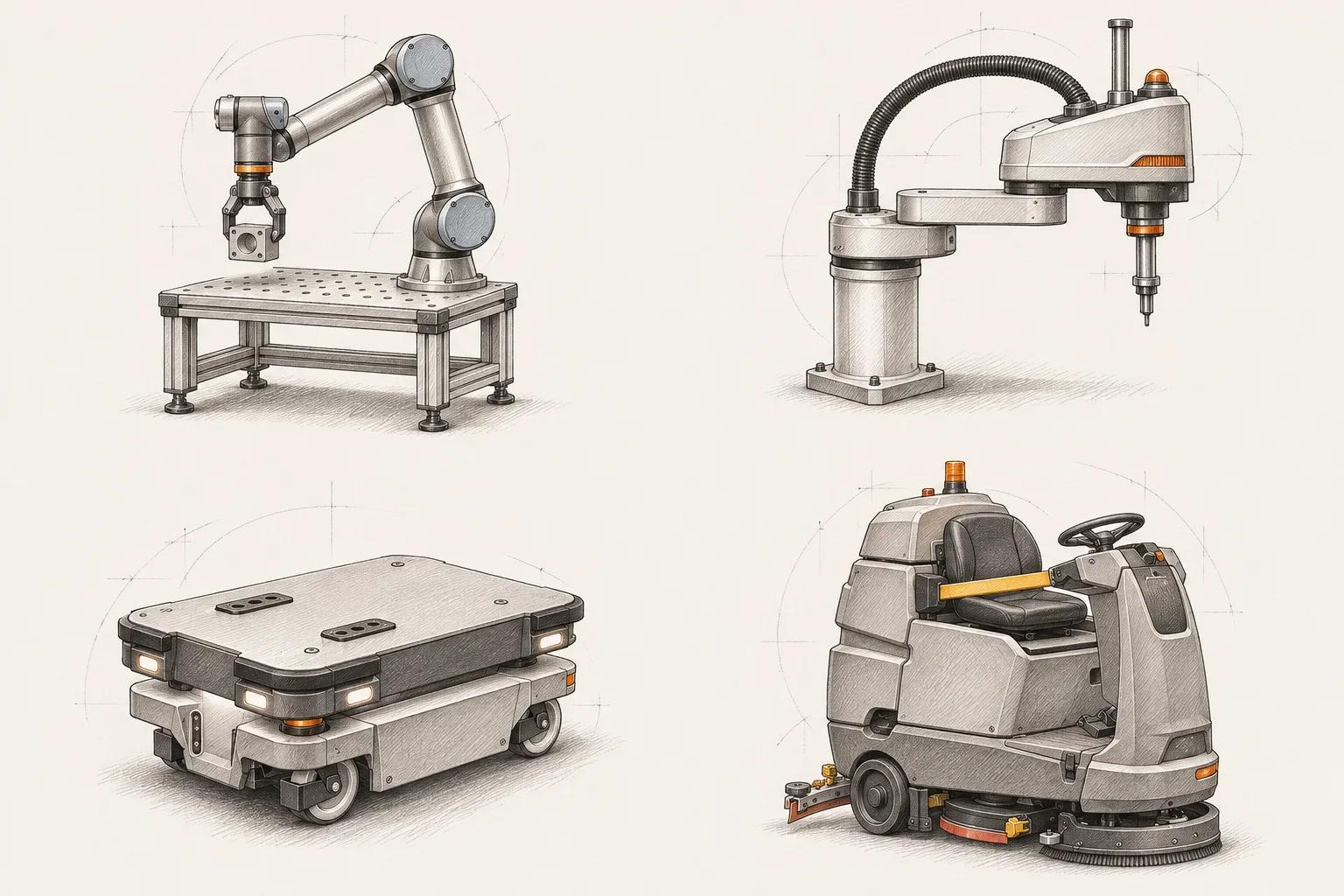
01 / Fabrication to print
Your drawing.
Our starting point.
Sheet metal, machined parts and assemblies. Select the part family, then define the requirements that matter.
Controller cabinets
Enclosures, panels, sub-panels and fan plates.
02Cell guarding
Fence panels, guard frames and sensor mounts.
03Pedestals & bases
Risers, floor plates and mobile carts.
04Tooling hardware
Adapter plates, brackets and gripper mounts.
05Mobile robot metalwork
Chassis brackets, battery trays and covers.
06Machined parts
Shafts, spacers, adapters and housings.
07Assemblies
Harnesses, box builds and sub-assemblies.
08Built to your drawing
From the drawing package to an approved release.
02 / Robot applications
Different machines.
The same drawing discipline.
5 application views. Each starts with a defined part and an engineering approval path.
Industrial / Build to print
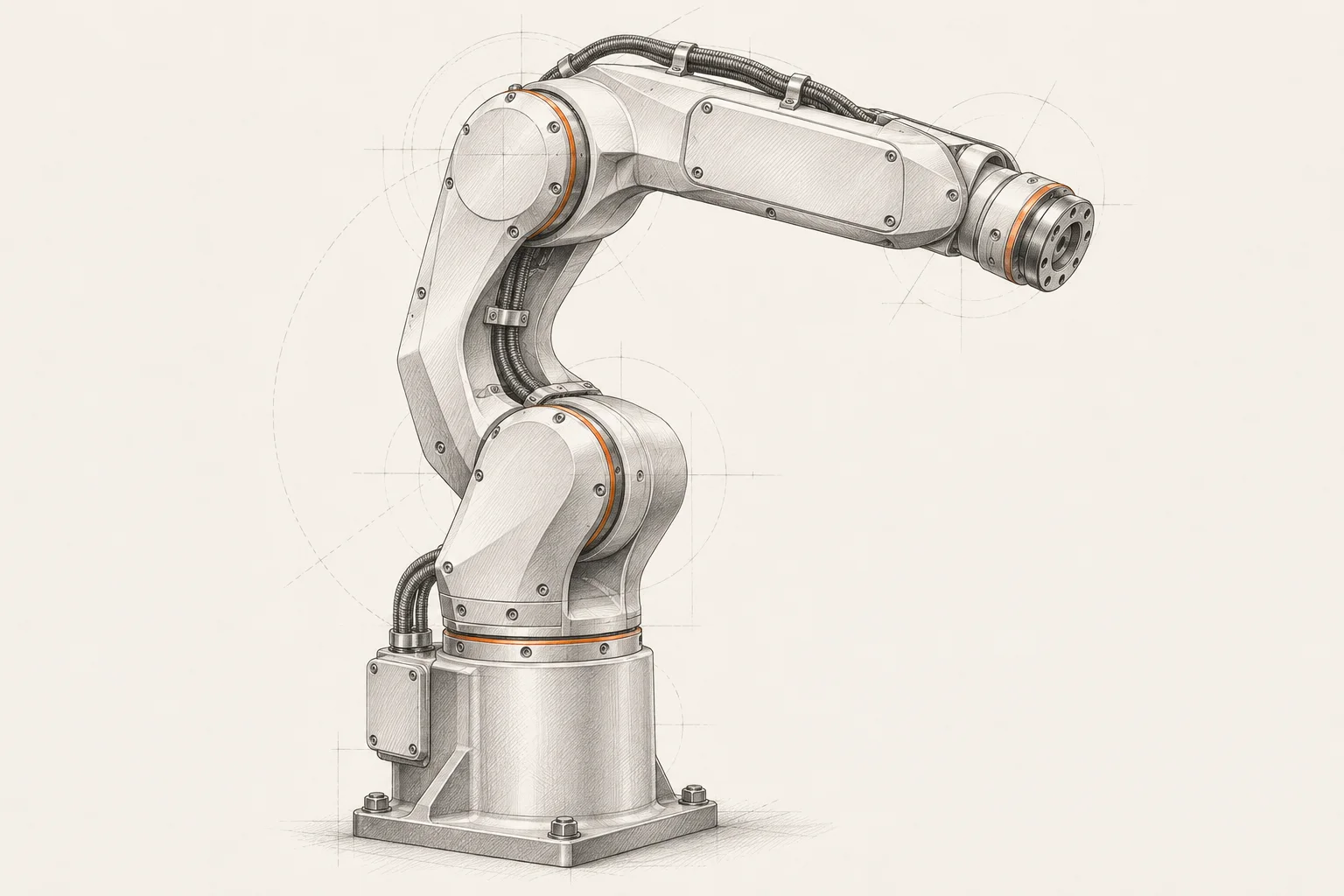
Metalwork around the robot.
Controller enclosures, cell frames, mounting plates and brackets start with the integrator’s drawing. Define the interfaces, access and loads before the part is quoted.
The robot model alone does not define a cabinet, base or guard. Send the approved part drawing and the cell requirements.
Review the part familyConcept illustrations. No OEM affiliation, part compatibility or installed use is implied.
Start with the part your project needs
A robot project has more than the robot arm. It may need a controller enclosure, cell frame, pedestal, cable bracket or tool plate. Each part has its own job and its own drawing. Clear boundaries help engineering and purchasing ask for the same thing.
Tell us which pieces you want made and which items you will supply. Add the model for context, then name the actual interfaces. A bolt pattern, mounting face or connector detail matters more than a broad description such as a bracket for a cobot.
Industrial arms and welding cells
For an industrial robot cell, the fabrication scope can cover panels, guard frames, riser bases and mounts. Mark the items that are fixed to the floor and those attached to moving equipment. Show the loads and clearances your design must support.
Welding cell drawings should name access needs, cable paths and areas exposed to the process. State the required material, finish and weld details. If a part has a safety function, add the review and checks needed for approval set by your engineering team.
Collaborative robots and assembly work
A cobot installation may call for a pedestal, base plate, mobile cart or tool mount. The robot name helps explain the project. Your approved drawing sets the part to be made, including hole locations, contact faces and any required mounting hardware.
For assembly fixtures, name the surfaces that locate the workpiece. Mark which features are key to fit and which are for clearance. Share inspection needs before quoting, especially when several fabricated or machined parts must come together in one assembly.
Mobile robots and service equipment
Mobile and service robot projects may need chassis brackets, covers, battery trays or frames. Send the exact drawing for the model and revision involved. Add mounting details, service access and the space needed for wiring, connectors and any installed components.
A battery tray is a fabricated part. The battery is a separate specified product. Its size, weight, terminals and restraint method affect the tray design. Do not choose a replacement battery by appearance, or assume a catalog battery can serve as a main robot pack.
Precision automation and emerging robot designs
SCARA systems and precision assembly work can require small brackets, adapters, housings and covers. A compact part may still have a key locating face or fit. Put those needs on the drawing rather than relying on a broad note that the part must be exact.
For a new robot design, send the drawing and specs. This applies to humanoid work too. A sketch may show the idea, but it does not set the part. State the material, sizes, joins, required checks and drawing version. These details form the basis of a firm build quote.
Make, integrate and supply
Our robotics offer draws on manufacturing roots that date to 1977. That heritage spans nearly 50 years in elevator and escalator parts. We bring sheet metal, machining, welding, assembly and parts supply to each defined build. Your drawing sets the work. Our production team reviews the process, open questions and checks needed before the quote is agreed.
Make covers the part and its build needs. Integrate brings parts together through agreed assembly tasks. Supply covers specified standard items. A project can use more than one route. The quote should state which tasks and materials it covers.
Choose the part family that fits your request. Each has its own page: controller cabinets, guards, pedestals, tooling, machined parts and electromechanical assembly. The pages help you prepare the files and details needed for a quote. Use the RFQ page to send your request for review.
Control cabinet components come second
The parts offer has fuses, relays, contactors, phase monitors, power supplies, cabinet fans and selected mechanical items. These are catalog choices for review. A listing does not show fit for a robot model, current count or an agreed delivery date.
For a replacement, send the manufacturer, full part number, revision and ratings. Add a clear label photo and the equipment details where available. If another choice is allowed, explain the approval path. Your engineering sign off governs any part change.
Keep fabricated parts and standard parts as separate lines in your request. That makes scope, records and approval easier to follow. If you want them assembled together, add the bill of materials and the checks required before the finished assembly is released.
Buyer questions
Define the detail.
Know the next step.
Do you make complete robots?
Our offer is build to print metal parts and assemblies with a set scope, plus specified control cabinet parts. Send the part or assembly scope you need. The request should name the parts and assembly tasks to be covered by the build quote.
Does naming a robot brand confirm fit?
No. A model name is useful context, but it does not prove part compatibility. For fabricated work, the approved drawing governs. For standard parts, the full maker reference and specs must be checked. Your engineering team controls any part change approval.
Can one request include fabrication and components?
Yes. List the fabricated items, purchased items and assembly work separately. Add drawings, a bill of materials and the requested counts. The review can then name which lines have enough information to quote and which need a specification or approval before an offer.
What should I send first?
Send the current drawing and version or exact maker part number, count, delivery location and target date. Add material, finish and inspection needs for fabricated parts. If a date or detail is not yet set, say so. Use the RFQ page to begin the review.